Posted in

107會考英語試題_27

[題組:第27到28題]
The sky is turning bright and clear.
The earth is wearing red and green.
Winter is gone; spring has come.
The air smells fresh and sweet.
The summer heat is not yet here;
A little fox comes out to play.
A bird is busy in a tree
Waking a daisy from her sleep.
Little daisy, little daisy,
People call the flower the “day’s eye.”
When she opens her eye,
The springtime brings us cheer.

27.
(A) Spring.
(B) Summer.
(C) Autumn.
(D) Winter.

[題組題]
答案
Posted in

107會考英語試題_29

[題組:第29到31題]
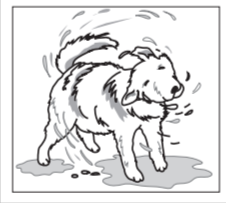
When we get wet, we need a towel to get ourselves dry. When a dog gets wet, all it needs is to shake its body. A study in 2010 showed that a wet dog can throw off half the water on its body by shaking for less than a second. In fact, this common act of dogs works better than a washing machine.
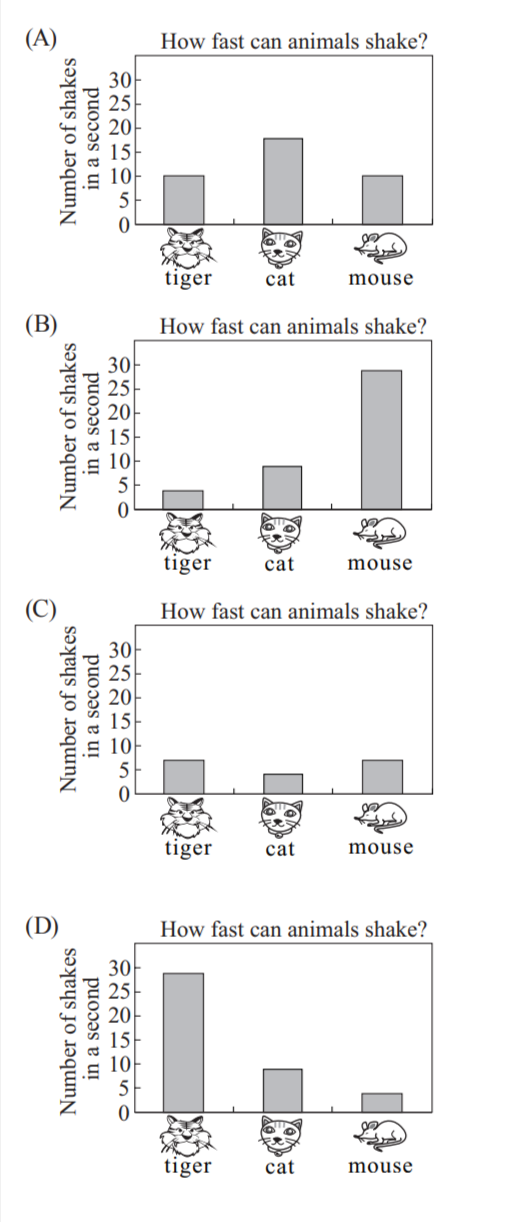
The study found that animal shaking begins with the head and ends with the tail. During a shake, the animal’s head, body and skin all move. Smaller animals must shake faster than bigger animals to get water off. For example, in one second, a rat can shake 18 times, a dog 6 times, and a bear 4 times. Bigger animals can get their bodies dry with fewer shakes.
For animals, shaking is not just about getting themselves dry. It is also about saving their lives. Being wet makes animals heavier, and that makes it harder to run. In the animal world, how fast an animal can run often decides whether it will live or not. Maybe that’s why the “wet-dog shake” has become a common habit of many animals.

29.
(A) Different animals’ shaking begins with different body parts.
(B) Shaking is a way that animals use to make other animals scared.
(C) Animals that are not kept as pets do the shaking better than those that are.
(D) Shaking themselves dry may help animals run faster in dangerous moments.

[題組題]
答案
Posted in

107會考英語試題_32

[題組:第32到34題]
Josh: Do you know about “pay it forward coffee” at Flora Cafe?
Eric: You mean you pay for a cup of coffee for someone poor to have it later?
Josh: Yeah. A cup of coffee is not much, but on cold winter days like today, it might warm them up a little. And maybe their hearts too.
Eric: But will Flora Cafe really give this cup of coffee to someone later?
Josh: Come on. I’ve known the shopkeeper well. He’s an honest man. He’s got a blackboard in the shop that says how many cups are paid for and how many have been given out.
Eric: But how will they know who to give? Anyone can ask for it, even if they’re not poor.
Josh: True, but then I guess they’ll just have to believe in people.
Eric: Perhaps. But will poor people go and ask for a free coffee? Won’t they worry about losing face?
Josh: Why do you always say things like that?
Eric: Well, it may happen.
Josh: Yeah, I know, but I still think it’s a good thing to do, and it gets people to care about others.

32.
(A) Problems about the free coffee plan.
(B) Trouble for people who go to Flora Café.
(C) Ways to make the free coffee plan successful.
(D) Good things free coffee will bring to Flora Café.

[題組題]
答案
Posted in

107會考英語試題_35

[題組:第35到37題]
Over the years, the number of whales has dropped a lot. From 1946 to 1986, about 340,000 whales were killed. People worry that children in the future can only see whales in pictures. They believe all kinds of whaling (whale hunting) should be stopped before it is too late.
People around the world are trying to stop whaling, but they have forgotten one fact: Whaling has been going on for a long time before it became a problem. Whaling started more than 1,500 years ago. For tribes (groups of people living together), it was a way to live. The local soil was not good for growing crops, so they killed whales to get meat. They also used whale fat to make candles or oil for lamps. For a long time, whaling was not just a way to live, but part of who they were.
Tribal whaling is not what we should worry about. Only 10% of the whales killed in the last forty years were from tribal whaling. The other 90% died from commercial whaling (whaling to make money). When we try to stop all kinds of whaling, we should think about what we are asking tribes to give up. Is this really the best answer to the whaling problem?

Below are the writer’s points in the reading: a. Whether we should stop tribespeople whaling b. The problem of whaling c. Whaling as a way of life In what order does the writer talk about his points?

35.Below are the writer’s points in the reading: a. Whether we should stop tribespeople whaling b. The problem of whaling c. Whaling as a way of life In what order does the writer talk about his points?
(A) a→c→b
(B) b→c→a
(C) c→a→b
(D) c→b→a

[題組題]
答案